
Myopia Management

When the Prescription Keeps Getting Stronger
If your child’s nearsightedness seems to change every year, there may be more to discuss than simply updating the glasses.
Myopia management focuses on helping children see clearly today while also looking for ways to slow how quickly their myopia progresses over time.
What Is Myopia?
Myopia, or nearsightedness, makes distant objects look blurry while closer objects remain easier to see.
In many children, myopia progresses as the eye grows longer. That is why a prescription may continue to become stronger during childhood and adolescence.
Why Does Progression Matter?
A stronger prescription is not the only concern.
Higher levels of myopia are associated with a greater lifetime risk of certain eye conditions, including retinal problems, glaucoma, cataracts, and myopic maculopathy.
The goal of myopia management is not to scare families or promise that progression can be stopped. It is to identify children who may benefit from treatment and help slow progression when appropriate.
Correcting Myopia vs. Managing Myopia
Vision correction helps your child see clearly.
Myopia management goes a step further by using treatments designed to slow how quickly the prescription and the eye itself change over time.
That distinction is important because standard glasses can correct the blur without necessarily affecting progression.

Myopia Management Options
There is no single treatment that is right for every child. Your doctor may consider factors such as age, prescription, rate of progression, eye health, lifestyle, and how consistently a treatment can be used.
Myopia-Control Spectacle Lenses
Specialized spectacle lenses can correct vision while also using optical designs intended to slow myopia progression.
San Gabriel Eye Center offers Essilor Stellest®, an FDA-authorized spectacle lens for children who meet specific age, prescription, and eye-health criteria.
Myopia-Control Contact Lenses
Certain soft contact lenses are designed to correct distance vision while also creating an optical treatment effect intended to slow progression.
These may be an option for children who are ready for contact lens wear and can manage the required care and hygiene.
Orthokeratology
Orthokeratology, or Ortho-K, uses specially designed rigid contact lenses worn overnight to temporarily reshape the front surface of the eye.
Some doctors also use Ortho-K as part of a myopia-management plan.
Low-Dose Atropine
Low-dose atropine eye drops may be considered for some children to help slow myopia progression.
Atropine does not correct the child’s vision, so glasses or contact lenses are still needed, and treatment requires regular follow-up.
Which Option Is Right for My Child?
That depends on the child.
Age, prescription, progression rate, lifestyle, eye health, family preferences, and treatment consistency all matter.
Our doctors can evaluate how your child’s myopia is changing, explain the available options, and help determine which approach makes the most sense.
The Goal Is Progress, Not Perfection
Myopia management does not stop or reverse myopia, and children may still need stronger prescriptions over time.
The goal is to slow that progression as much as reasonably possible while continuing to monitor your child’s vision and eye health.
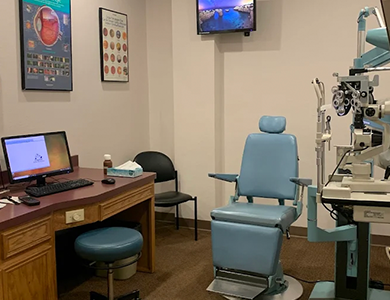
No appointment needed for optical — walk in anytime. Bring Your Own Rx — we'll cut your lenses while you wait.
Practice Info
Hours of Operation
Optical Opens at 8:30am
- Monday 8:00am - 5:30pm
- Tuesday 8:00am - 5:30pm
- Wednesday 8:00am - 5:30pm
- Thursday 8:00am - 5:30pm
- Friday 8:00am - 5:30pm
- Saturday Closed
- Sunday Closed
© 2026 San Gabriel Eye Center. All rights Reserved. Accessibility Statement - Privacy Policy - Sitemap
Powered by:
