
Why Early Detection of Myopia Matters


Have you ever watched your child bring a book closer and closer to their face? Or noticed them squinting to see a friend across the playground? That quiet wondering you feel, “Is their vision okay?”, is your intuition as a parent speaking up.
Myopia, or nearsightedness, is very common. It means seeing things up close clearly, while distant things look blurry. But it is more than just needing glasses. Catching it early is one of the most caring things you can do for your child’s learning, confidence, and long-term eye health.
Seeing the World Through Their Eyes
Imagine trying to watch a movie where the screen is always just a bit fuzzy. Or feeling a headache build during class because you are straining to see the board. For a child with undetected myopia, this can be their everyday reality.
The tricky part is that kids often do not tell us. They might think everyone sees the world this way. They do not know to ask for help. So, they adapt. They sit at the very front of the class. They lose interest in sports where you need to track a ball. They might even be called a “slow reader” when the real issue is that the words are blurry.
This is why your observation is so powerful. You might notice small things:
They squint when looking across a room.
They hold devices or books unusually close.
They complain of headaches or tired eyes after school.
Their grades or enthusiasm for schoolwork dip.
These are not just habits. They are clues. And picking up on them early changes everything.
Why “Right Now” Is the Best Time to Act
When you act on those clues, you do two wonderful things for your child.
First, you give them back a clear world. The relief a child feels when they put on their first pair of glasses and see leaves on a tree or the teacher’s smile from across the room is immediate. School becomes easier. Play becomes more fun. Their confidence grows because they are no longer struggling to keep up.
Second, and just as important, you protect their future sight. Myopia is not just a prescription; it means your child’s eyes are growing too quickly. Once the eye elongates, we cannot reverse it. And a longer eye is a more vulnerable eye, with higher risks for serious conditions like glaucoma or retinal detachment later in life.
This is the heart of early detection: it is not just about correcting vision today, but managing it for tomorrow. When an eye doctor knows about myopia early, they can start simple strategies to help slow that growth down. This proactive care is a true gift for your child’s lifelong health.
The Simple, Painless Step That Gives You Answers
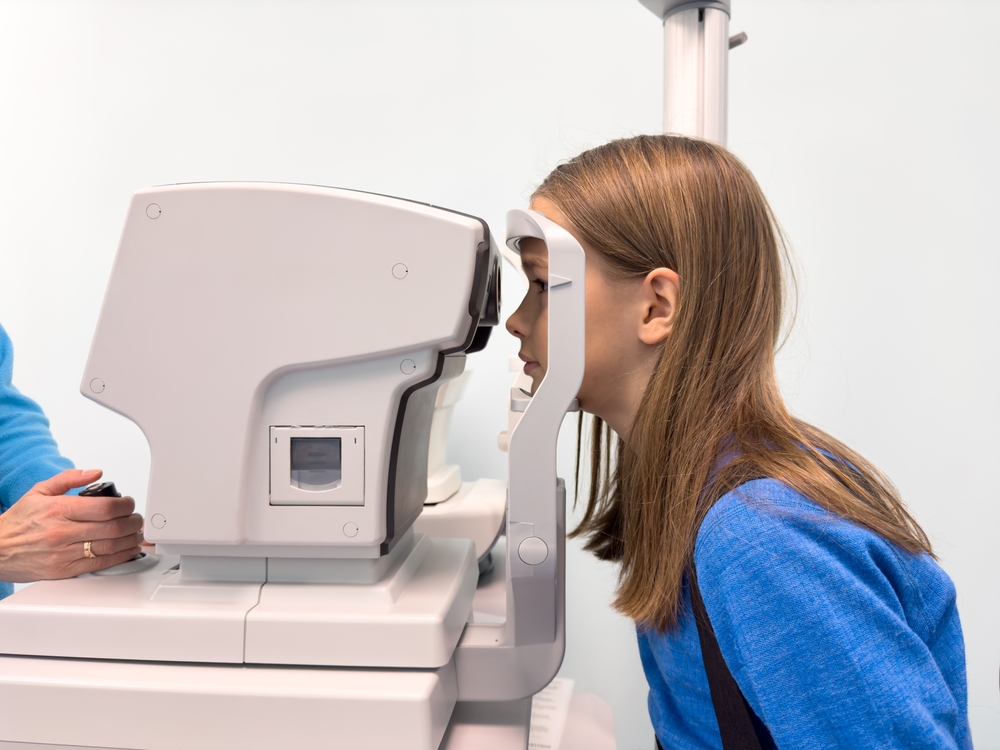
You might wonder what happens next. A children’s eye exam is gentle, thorough, and nothing to worry about. It is more than just reading letters on a chart. The eye doctor will evaluate how the eyes focus, work together, and check their overall health. They can spot myopia even before your child is aware of any problem.
Think of it as a routine checkup, just for their eyes. The peace of mind you get from a clear answer is invaluable.
For more on the benefits of early myopia detection, visit San Gabriel Eye Center. Our office is in Georgetown, Texas. Call (512) 863-2078 to book an appointment today.
https://www.ncbi.nlm.nih.gov/books/NBK607616/
https://my.clevelandclinic.org/health/diseases/8579-myopia-nearsightedness

All Eye
Care Services

Keep
In Touch
Quick contact form
Clinic Hours
Optical opens at 8:30 AM
Hours:
Monday - Friday: 8:00 AM - 5:30 PM
Optical opens at 8:30 AM
Monday - Friday: 8:00 AM - 5:30 PM
Optical opens at 8:30 AM
Powered by: 